
Special Exhibits
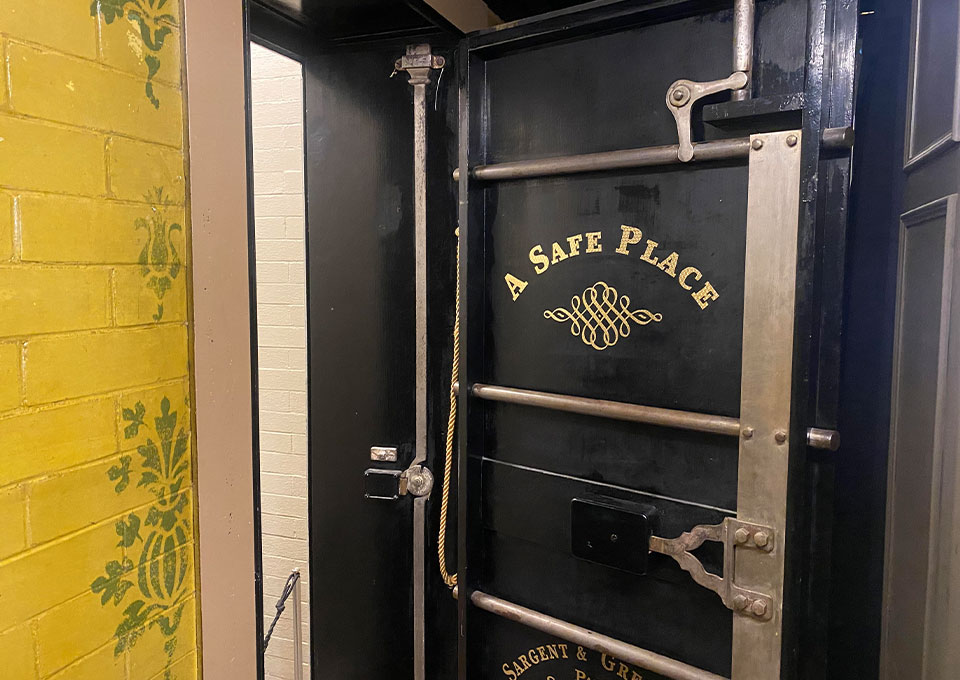

Special Exhibits: What's in the Vault?
A Visit to Elizabeth Town (Circa 1776)
Elizabethtown was at the forefront of the Revolutionary War and home to Alexander Hamilton, Elias Boudinot, and Shepard Kollak among other notable revolutionaries. View rare objects and artifacts related to these early patriots.
Now on display through November 11.
METC would like to thank the Elizabeth Public Library and their staff for loaning these artifacts from their local history and special collections.
Past Special Exhibits
The archaeological artifacts on exhibit here are from the Luke Miller house, located on Ridgedale Avenue in Madison. Historically referred to as Miller Station, they were found during an excavation of the property’s forge in 2008. Despite being fragments, the pieces on display are a tangible link to the life of the house and its people. During the American Revolution, its owner, Luke Miller, was a major during the war and welcomed numerous soldiers, including General George Washington to his home and blacksmith shop.
METC would like to thank the Madison Historical Society for their loan and assistance with this exhibit.
Every year or so, The Book Arts Roundtable issues a Collaborative Challenge to members by choosing a theme and setting several parameters, such as shape, size, kind and color of paper, or required element. Each participating artist then creates an original work within those parameters and makes one for every participant (plus two more for the archives). These Collaboratives simultaneously showcase the individual artists’ creative interpretations and connect them by theme and parameters.
Each year’s Collaborative thus becomes a wonderful example of E Pluribus Unum — the Making of One out of Many
“A Woman’s Work is Never Done” features work from New Jersey artist Pam Cooper. Primarily composed using found objects and handmade paper, these pieces highlight the repetition, skill, and demands of domestic labor.
Considered one of the finest independent printers and typographers of the twentieth century, Joseph Ishill ran the Oriole Press until the 1960s. On loan from Berkeley Heights Public Library, these archives have rarely been seen or exhibited and include hand-bound books, volumes of poetry, and wood blocks. An anarchist and radical, Joseph Ishill had regular correspondence with Emma Goldman, Havelock Ellis, and other avant-garde thinkers of the era.
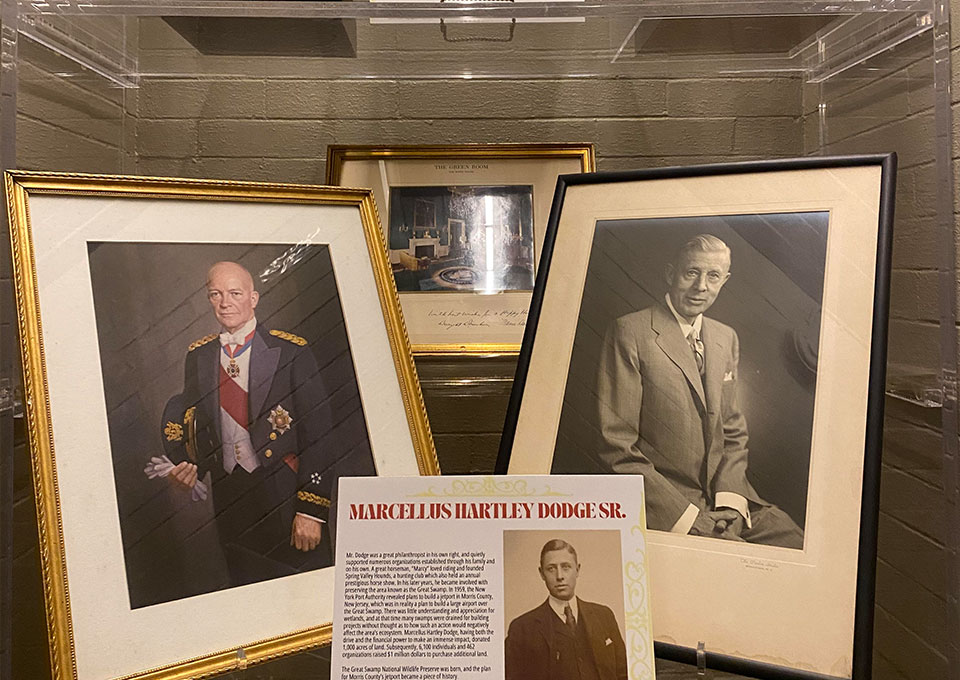
A great horseman, “Marcy” loved riding and founded Spring Valley Hounds, a hunting club which also held an annual prestigious horse show. In his later years, he became involved with preserving the area known as the Great Swamp. In 1959, there was little understanding and appreciation for wetlands, and at that time many swamps were drained for building projects without thought as to how such an action would negatively affect the area’s ecosystem. Marcellus Hartley Dodge, having both the drive and the financial power to make an immense impact, donated 1,000 acres of land. Subsequently, 6,100 individuals and 462 organizations raised $1 million dollars to purchase additional land. The Great Swamp National Wildlife Preserve was born, and the plan for Morris County’s jetport became a piece of history.
We all see things differently. This exhibit features objects from METC’s collection that aid the ability to see. It also highlights New Jersey institutions such as the Seeing Eye in Morristown and the Talking Book & Braille Center at the NJ State Library in Trenton, who help those without sight.
Spotlight on METC’s Viewable Storage Facility and its impact on the museum and its collection
This exhibit gave a behind-the-scenes look at METC’s Viewable Storage Facility project, its importance to our collections, the unique history of the building, and the treasures uncovered during renovations
This outdoor installation on the grounds of METC consisted of multi-dimensional modular sculptures in the pattern of beehives. A visual and tactile exhibit, The Bee Project encompassed art, education, and science, drawing attention to the long history of local beekeeping, and the human-caused threats to honeybee colonies and wild bees worldwide. These vibrant, colorful honeycombs functioned as a base for a multitude of hand-crafted bees created by visitors, students, artists, and educators using reclaimed and recycled objects.
This exhibit provided an overview of the architectural history of METC’s home, the James Library Building.
Developed by high school student James Beacham, this exhibit explores the history, impacts, and culture of Latin American immigrants and their descendants in New Jersey.